


Today we look at a heart breaking rescue which all could have been prevented
When Love Isn't Enough
Some rescues stay with you. Not because they're the most dramatic, but because they reveal something uncomfortable about how quickly things can unravel.
The call came from the RSPCA. Eleven cats. Three generations of them. All living with a family with teenage children. Every single cat had cat flu. The family were facing eviction.
Most house rescues are difficult. Often we're negotiating with owners who don't believe their animals need help, where the cats' welfare has to come first regardless of anyone's feelings about it. We've seen hoarders, abusers, people who view animals as disposable. Those cases are clearer, if no less distressing.
What made this case different was walking into a home where love was never in question. The teenage children clearly adored these cats. They'd grown up with them. You could see the bonds.
We took four cats first, giving the family time to adjust. Watching those first goodbyes, you're reminded that our work sits at an impossible intersection. A few weeks later, we returned for the rest. By then, everything had deteriorated. The family was facing eviction the following day. Our job is always the cats' welfare – that's what we're there for, that's what we're equipped to handle. But standing in that house, watching children say goodbye to animals they'd bottle-fed from kittens, whilst facing homelessness the next day, the neat separation between animal welfare and human welfare collapses entirely.
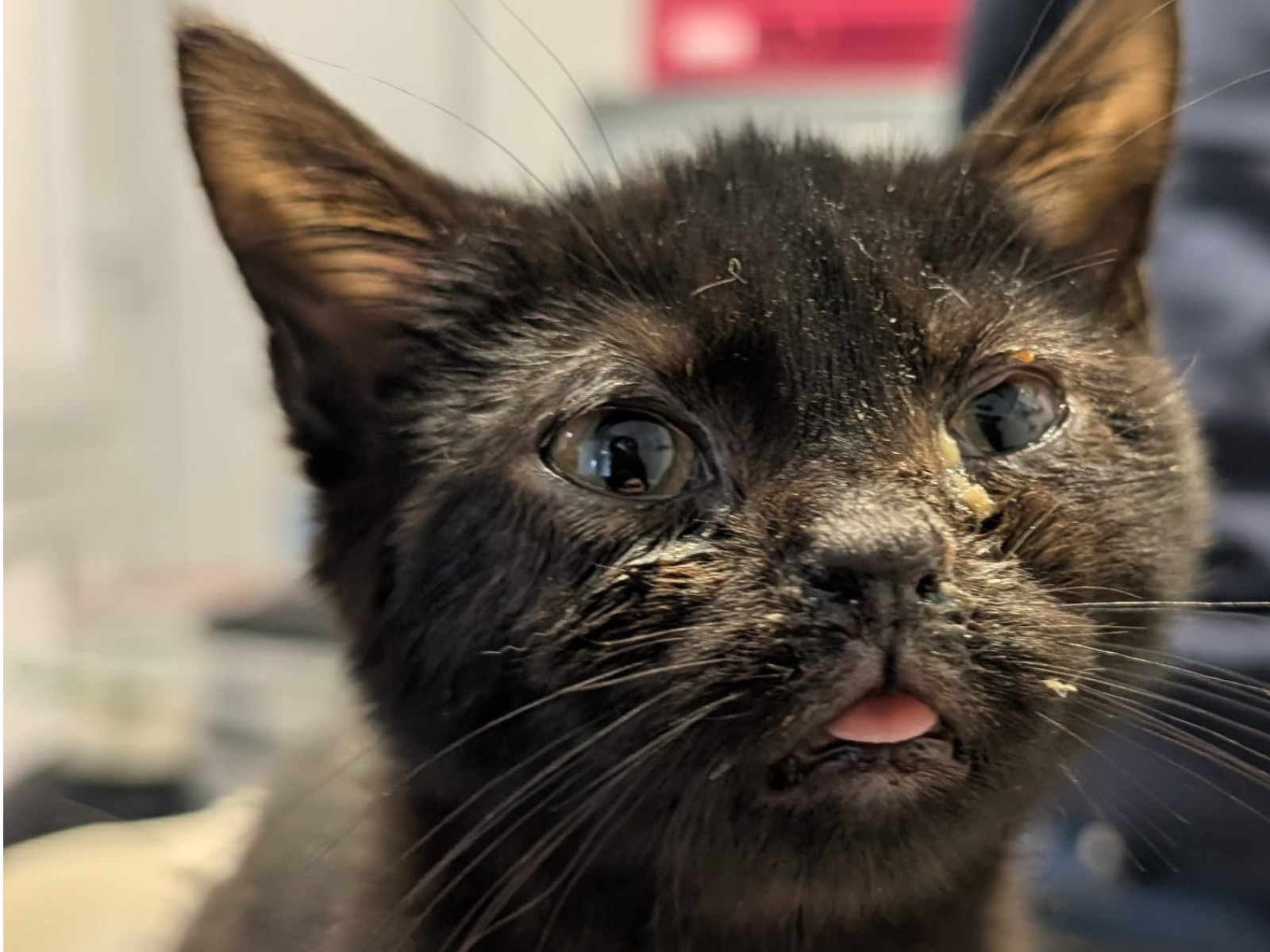
H-ash, one of the cats from the eviction rescue, who required extensive dental work dur to flu
People assume we only see two types of situations: the heartwarming rehoming stories, or the clear-cut cases of cruelty and neglect. The truth is messier. We see people who connect with animals because they're struggling themselves, we see people using our volunteering programmes to rebuild confidence, to have a reason to get up in the morning. We see the elderly who've outlived their ability to care for their pets. We see families where one unexpected redundancy tips everything into chaos.
This was rarer still: well-intentioned love that had simply multiplied beyond control. One unspayed cat. Then kittens. Then those kittens having kittens. A family already stretched thin, now caring for eleven mouths they couldn't feed properly, eleven animals they couldn't afford to treat.
The cats came back to us in poor shape. Cat flu, when it's severe and untreated, is brutal. It attacks their respiratory systems, leaves them struggling to breathe. It destroys their teeth and gums.
One needed emergency dental work – all but three teeth removed. All of them needed antibiotics, flea treatments, deworming. Slowly, with patience and veterinary care, they stabilised. Then improved. Then, finally, began to behave like cats again – playing, grooming, seeking affection.
Over £7,000 in veterinary bills. Weeks of rehabilitation. Eleven separate rehoming processes, finding the right families, conducting home checks, making sure each cat went somewhere they'd thrive.
All eleven cats have since been rehomed. They're thriving now. Healthy, loved, in homes that can provide for them. But that family remains in our minds.
Here's the thing that haunts us: this entire situation – the infections, the breeding, the financial spiral, a family losing everything – started with one decision. One unspayed cat. A £150 procedure that didn't happen, probably because £150 was already too much.
We see this pattern repeatedly. The small, preventable thing that cascades. It's why we push neutering programmes, why we help to educate about the impact of not neutering, why we try to intervene before crisis point. Because by the time we're called, it's often too late to prevent the heartbreak. We can only pick up the pieces.
It cost us £7,000 to put right. It cost that family far more.


